
Food Focus: Winter Squash
(This article appeared in the October 2011 issue of A Healthy You and was prepared as part of a collaborative effort with other IIN Health Coaches).)
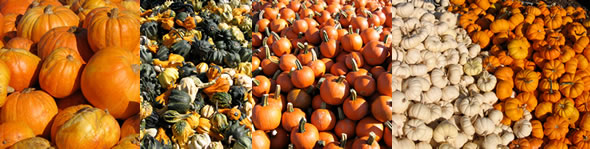 As members of the Curcurbitaceae family, winter squash come in a multitude of sizes and colors. With hard shells, some have a shelf life of up to 6 months under proper storage conditions.
Some of the more common varieties are:
- Acorn squash – distinct ribs run the length of its hard, blackish-green or golden-yellow skin, pale orange flesh that is sweet and slightly fibrous.
- Butternut squash – beige color, shaped like a large bell or pear, deep orange flesh similar in flavor to sweet potato, sweet and slightly nutty flavor.
- Delicata squash – also called peanut squash, creamy pulp that tastes a bit like corn and sweet potatoes.
- Hubbard squash – extra-hard skins make them one of the best keeping winter squashes. Very large with blue-grey skin and dense flesh.
- Kabocha squash – Kabocha is the generic Japanese word for squash, but refers most commonly to a squash of the buttercup type. This squash has a green, bluish-gray or a deep orange skin. The flesh is deep yellow.
- Pumpkins – the smaller sugar variety are used for cooking, sweet orange flesh.
- Spaghetti squash – A small, watermelon-shaped variety, golden-yellow oval rind. When cooked, the flesh separates in strands that resemble spaghetti pasta, mild nut-like flavor.
- Turban squash – Named for its shape. Colors vary from bright orange, to green or white. It has golden-yellow flesh and its taste is reminiscent to hazelnut. Has a bulblike cap swelling from its blossom end.
Winter squash are a rich source of carotenes as well as an excellent source of vitamins C, folic acid and B1, potassium and dietary fiber. When selecting winter squash, look for ones that feel heavy for their size and have dull hard rinds. Due to their hard nature, winter squash are best baked.
Sources:
The Encyclopedia of Healing Foods, Michael Murray N.D.
