
Food Focus: Walnuts
Food Focus: Walnuts
Walnuts are rich in protein and high in potassium, zinc and iron. They are the fruit from a tree in the walnut family Junglandaceae.
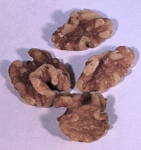
Most of us are familiar with the “nut” which is found inside the hard shell. But did you know that other parts of the walnut tree have beneficial uses and properties? Here are a few properties of this amazing plant:
The bark
- Is astringent and cleansing.
- Strengthens the gums (used to treat gum disease) and acts as an anti-inflammatory.
- Discourages milk flow in nursing mothers.
 The nut
- Aphrodisiac and mildly laxative.
- Prevents worms.
- Soothing and a natural digestive.
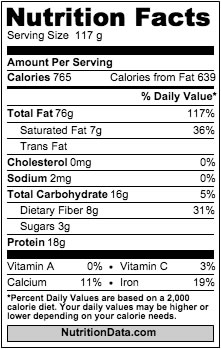
- Delicious and Nutritious.
- Believed to have both preventive and therapeutic effects.
- Rich in omega-3 fatty acids
- Very low in Cholesterol
- Rich in potassium
- Very low in Sodium
- Good source of Copper
- Very good source of Manganese
Although walnuts are high in protein, it is not a complete protein. To make a more complete protein, it is suggested that it be eaten in combination with foods that offer an complementary amino acid profile (lysine).
In a published study* (Effects of walnuts (Juglans regia) on learning and memory functions) that was designed to evaluate the effects of walnuts on learning and memory in male rats, a significant improvement in learning and memory of walnut treated rats was observed (as compared to controls). There was also an observed decrease in food intake for the walnut treated rats while the percentage change in their growth rate remained comparable to the controls.
Uses
Walnuts can be eaten daily to relieve fatigue and to strengthen the body. Since they are rich in potassium, they are good for the heart. They are also good for heartburn and diarrhea.
Add cranberries for a powerful combination:
Cranberries are known to have an antiseptic effect of the urinary system, to control asthma and to improve the health of the circulatory system.
References:
- http://nutritiondata.self.com/facts/nut-and-seed-products/3138/2#ixzz3dTJ4hhk3
- *Plant Foods For Human Nutrition (Dordrecht, Netherlands) – http://www.ncbi.nlm.nih.gov/pubmed/22048906

One Comment
Comments are closed.